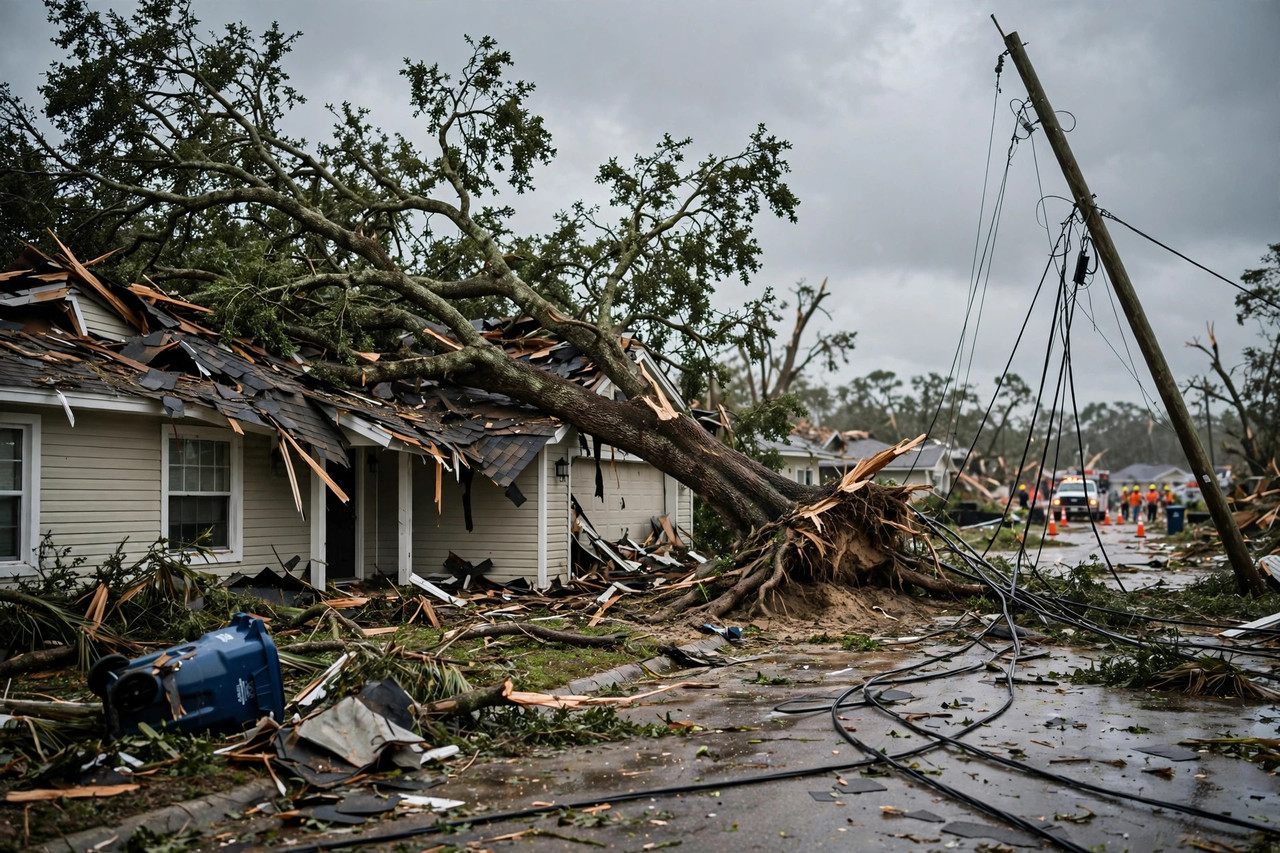
Florida's death toll from Hurricane Isaias has risen to six, Governor Ron DeSantis said on Tuesday, tripling the number of confirmed storm deaths in the state days after the hurricane struck the Florida Panhandle over the weekend. The four newly confirmed fatalities include a crash at an intersection where the storm had knocked out the traffic signal and two cases in which the hurricane's aftermath interrupted critical medical treatment. The announcement came as crews across four states continued working to restore power and clear debris from one of the season's most disruptive storms.
DeSantis told reporters the state had "now had six storm-related fatalities," updating a count that had stood at two earlier in the week. Both of the previously confirmed deaths were in Escambia County in Florida's far western Panhandle: one resident was killed when a tree fell onto their home, and another died of carbon monoxide poisoning from a generator running inside a garage.
The four additional deaths confirmed on Tuesday included the crash at the darkened intersection and the two medical emergencies, a grim reminder that hurricanes keep killing long after the winds die down. Downed power lines, dead traffic signals and blocked roads remain dangerous across the region, and emergency officials have repeatedly warned residents never to run generators indoors.
Isaias made landfall early Saturday as a powerful hurricane, leaving hundreds of thousands of residents without power across Florida, Alabama, Georgia and Mississippi. NewsPulse followed the storm from its unusual arrival — the season's first and record-late hurricane — through its buildup to a Category 2 system and its weekend strike on the Panhandle, when it left at least two people dead and more than 850,000 without electricity before pushing inland as a post-tropical system that spread flooding and tornado threats across the Southeast.
Alabama has also confirmed two deaths from the storm, Governor Kay Ivey said Saturday, bringing the confirmed toll to eight across the two states. Officials caution that fatality counts often rise in the days after a major storm as damage assessments reach isolated areas.
The scale of the disruption remained visible across the region on Tuesday. Pensacola's airport — Florida's tenth-largest — was damaged by the storm and remains closed to commercial flights until further notice, according to Reuters. In Alabama, emergency management officials said downed trees and power lines made travel hazardous in Houston County, which remained under a flash flood warning. Emergency declarations were approved in Florida and Alabama to unlock federal response resources, Homeland Security Secretary Markwayne Mullin said on X. President Donald Trump, asked about hurricane preparations on Friday, told reporters outside the White House that it was "under control."
Power restoration crews have been working through the week, but many customers were still waiting for service to return days after landfall — a familiar pattern in the Southeast, where recovery from major hurricanes is measured in days and weeks rather than hours. Officials have urged patience as crews clear debris and repair transmission lines before reconnecting individual neighborhoods.
With Isaias gone, attention turns fully to recovery — reopening roads and airports, restoring power, and accounting for every resident in the hardest-hit counties. Forecasters are also keeping an eye on the tropics: Hurricane Simon was crawling along Mexico's Pacific coast on Tuesday, with forecasters expecting it to approach Sinaloa later in the week, while the El Nino phenomenon continues to feed an intense hurricane season.
Isaias' rising toll underscores a hard lesson of hurricane country: the deadliest phase often arrives after landfall, at darkened intersections, beside silent-running generators, and in medical emergencies that cannot wait for the grid to come back. As cleanup continues across the Gulf states, the true cost of this season's late-arriving storms is still coming into focus.